

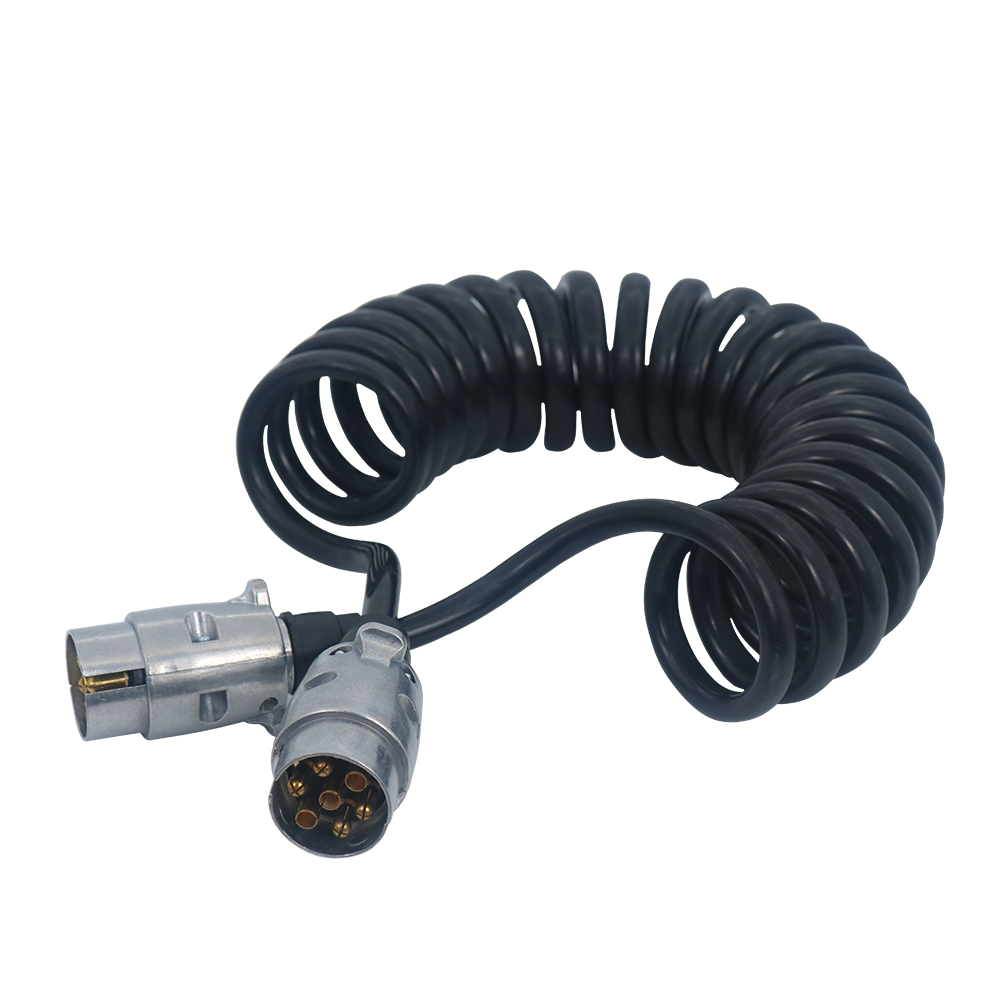
Premium Truck Curled Cable Features: What to Look for When Shopping
Industry Background and Market Demand
The commercial trucking industry relies heavily on durable and high-performance electrical components to ensure operational efficiency and safety. Among these, curled cables play a critical role in powering essential systems such as lighting, sensors, and communication devices. Unlike standard cables, premium curled cables are engineered to withstand extreme conditions, including vibration, abrasion, and temperature fluctuations.
With the rise of electric and autonomous trucks, demand for high-quality curled cables has surged. Manufacturers now prioritize materials and designs that enhance longevity while minimizing maintenance costs. Buyers must carefully evaluate key features to ensure compatibility with modern trucking applications.
Understanding Curled Cables: Key Concepts
Curled cables, also known as coiled or spiral cables, are designed with a helical structure that provides flexibility and stretchability. This design allows them to extend and retract without tangling, making them ideal for dynamic applications where movement is frequent.
The primary advantage of curled cables lies in their ability to maintain electrical integrity under mechanical stress. Unlike straight cables, which may fray or break under repeated bending, curled cables distribute stress evenly across their structure.
Critical Features of Premium Truck Curled Cables
1. Construction and Materials
- Conductor Material: High-grade copper (often oxygen-free) ensures low resistance and high conductivity. Some premium variants use tinned copper for corrosion resistance.
- Insulation: Thermoplastic elastomers (TPE) or cross-linked polyethylene (XLPE) provide superior heat and abrasion resistance.
- Shielding: Foil or braided shielding minimizes electromagnetic interference (EMI), crucial for sensitive electronic systems.
- Outer Jacket: Polyurethane (PUR) or rubber compounds enhance durability against oil, chemicals, and UV exposure.
2. Manufacturing Process
Premium cables undergo precision coiling to maintain consistent pitch and diameter. Advanced extrusion techniques ensure uniform insulation thickness, while automated testing verifies electrical performance and mechanical resilience.
3. Performance Metrics
- Flex Life: Measured in bend cycles, premium cables typically exceed 1 million cycles without failure.
- Temperature Range: High-performance variants operate between -40°C to 125°C.
- Tensile Strength: Reinforced designs prevent elongation under load.
Factors Affecting Quality and Performance
1. Material Selection – Substandard materials lead to premature wear or electrical failure.
2. Coiling Precision – Inconsistent pitch or tension can cause kinking or reduced flexibility.
3. Environmental Resistance – Cables must withstand moisture, chemicals, and extreme temperatures.
4. Connector Compatibility – Poorly matched connectors increase resistance and failure risk.
Supplier Selection Criteria
When sourcing curled cables, consider:
- Certifications: Compliance with ISO, UL, or RoHS standards.
- Testing Protocols: Suppliers should provide data on flex, abrasion, and environmental testing.
- Customization Options: Ability to tailor length, shielding, and connectors.
- Lead Times and Scalability: Reliable suppliers offer consistent quality at scale.
Common Industry Challenges
- Counterfeit Components – Some suppliers cut costs using inferior materials, leading to field failures.
- Compatibility Issues – Non-standard connectors or mismatched specs disrupt integration.
- Maintenance Costs – Low-quality cables require frequent replacements, increasing downtime.
Applications and Use Cases
1. Trailer Lighting Systems – Curled cables ensure reliable power delivery despite constant movement.
2. Sensor and Telematics Wiring – EMI-resistant designs maintain signal integrity in data-heavy systems.
3. Heavy-Duty Charging Ports – Electric trucks demand rugged cables for high-current charging.
Trends and Future Developments
1. Smart Cables – Integration with IoT for real-time condition monitoring.
2. Lightweight Materials – Aluminum alloys and advanced polymers reduce weight without sacrificing performance.
3. Sustainable Manufacturing – Recyclable materials and energy-efficient production processes.
FAQ
Q: How do curled cables compare to standard cables in harsh environments?
A: Curled cables outperform straight cables in dynamic applications due to their superior flex life and stress distribution.
Q: What certifications should I verify when purchasing?
A: Look for UL, ISO 9001, and RoHS compliance to ensure safety and environmental standards.
Q: Can curled cables be customized for specific truck models?
A: Reputable suppliers offer tailored solutions for length, shielding, and connector types.
Conclusion
Selecting premium curled cables requires careful evaluation of materials, construction, and supplier reliability. As trucking technology evolves, investing in high-performance cables ensures long-term operational efficiency and reduced maintenance costs. By prioritizing durability, flexibility, and compliance with industry standards, buyers can secure optimal solutions for modern commercial vehicles.
This website uses cookies to ensure you get the best experience on our website.



 WhatsApp
 Phone
Phone E-mail
Comment
(0)