

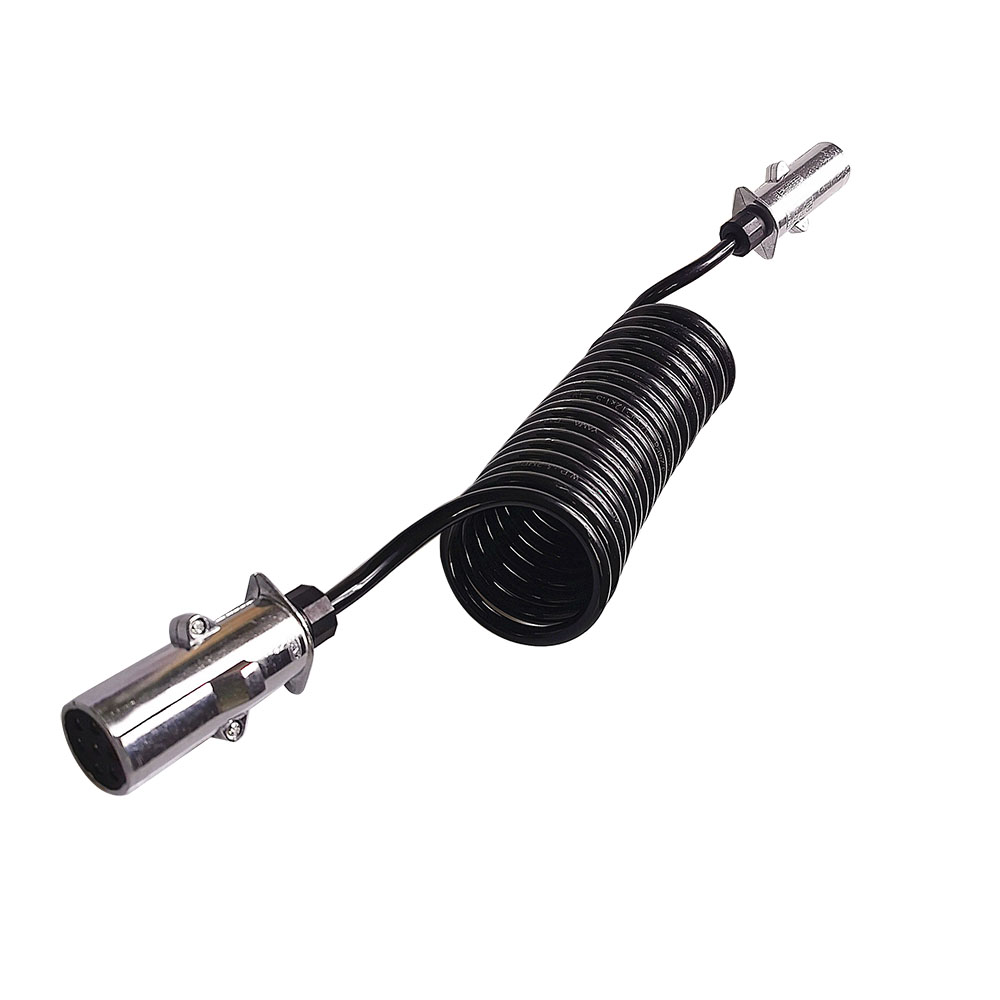
Anti-Static Truck Curled Cable: Safe for Flammable Goods Transport Trucks
Industry Background and Market Demand
The transportation of flammable goods—such as petroleum, chemicals, and liquefied gases—requires stringent safety measures to prevent accidents caused by static electricity. Traditional cables used in truck operations may generate static discharge, posing ignition risks in volatile environments. As regulatory standards tighten (e.g., ATEX, OSHA, and IECEx), demand has surged for specialized anti-static truck curled cables that mitigate electrostatic hazards while maintaining durability in harsh conditions.
The market for these cables is expanding, driven by stricter compliance requirements and growing awareness of electrostatic risks in logistics. Industries handling hazardous materials prioritize solutions that combine flexibility, abrasion resistance, and static dissipation—qualities that define high-performance anti-static curled cables.
Core Concept: Anti-Static Technology in Cables
Anti-static truck curled cables are engineered to prevent static buildup by incorporating conductive materials or shielding layers that safely dissipate electrical charges. Unlike standard cables, which may accumulate static due to friction or movement, these cables feature:
- Conductive Elements: Carbon-black-infused polymers or braided metal shields provide a controlled path for static discharge.
- Low-Resistance Jacketing: Materials with surface resistivity below 10⁹ ohms/sq prevent charge retention.
- Flexible, Curled Design: Coiled construction allows for repeated extension/retraction without compromising conductivity.
This design ensures that static charges are neutralized before reaching levels capable of igniting flammable vapors.
Product Structure and Performance
A high-quality anti-static curled cable consists of multiple layers, each serving a critical function:
1. Conductive Core: Copper or tinned copper conductors ensure efficient power/signal transmission.
2. Static-Dissipative Layer: A carbon-loaded thermoplastic or metal mesh surrounds the core, directing static away from sensitive areas.
3. Abrasion-Resistant Jacket: Materials like PUR (polyurethane) or TPE (thermoplastic elastomer) resist oils, chemicals, and mechanical wear.
4. Coiled Structure: Prevents tangling and withstands repeated stretching (typically up to 300% elongation).
Key performance metrics include:
- Surface Resistivity: <10⁹ ohms/sq (per IEC 60079-0).
- Temperature Range: -40°C to +90°C for extreme environments.
- Bend Cycles: >50,000 cycles without degradation.
Critical Factors Affecting Quality
Several variables determine the reliability of anti-static truck cables:
- Material Selection: Inferior conductive additives can degrade over time, reducing static dissipation.
- Shielding Integrity: Gaps in the conductive layer create weak points for static accumulation.
- Environmental Resistance: Cables must withstand UV exposure, moisture, and chemical splashes without cracking.
- Manufacturing Precision: Inconsistent extrusion or braiding can lead to premature failure.
Suppliers adhering to ISO 9001 and IEC certifications typically deliver higher consistency.
Supplier Selection and Supply Chain Considerations
Procuring reliable anti-static cables requires evaluating:
1. Compliance Documentation: Certifications (ATEX, UL, RoHS) validate safety claims.
2. Material Traceability: Reputable suppliers provide raw material datasheets (e.g., conductive compound origins).
3. Customization Capability: Some applications demand specific lengths, colors, or connector types.
4. Testing Protocols: In-house resistance testing (per ASTM D257) ensures batch-to-batch consistency.
European and North American manufacturers often lead in quality control, but cost-conscious buyers may source from certified Asian producers with proven track records.
Common Challenges and Industry Pain Points
Despite advancements, challenges persist:
- False Economy: Low-cost cables may lack proper static dissipation, leading to compliance failures.
- Installation Errors: Improper grounding negates anti-static properties.
- Wear Misdiagnosis: Operators may mistake jacket abrasion for static-related failures.
Regular inspections and staff training are essential to mitigate risks.
Applications and Case Studies
1. Fuel Tanker Trucks
A European logistics firm reduced static incidents by 80% after switching to coiled anti-static cables for tanker grounding systems.
2. Chemical Transport
A U.S. hazardous materials carrier reported zero electrostatic discharges over 18 months using shielded, oil-resistant cables.
3. Mining Explosives Transport
Anti-static cables with reinforced jackets proved critical in Australian mining operations, where dust and vibrations exacerbate static risks.
Current Trends and Future Outlook
Innovations shaping the market include:
- Smart Cables: Embedded sensors monitor static levels in real time.
- Eco-Friendly Materials: Bio-based conductive polymers reduce environmental impact.
- Hybrid Designs: Combined power+data cables for IoT-enabled fleets.
As automation and electrification advance, demand for safer, smarter cabling solutions will grow.
FAQ
Q: Can standard coiled cables be modified for anti-static use?
A: No—anti-static properties require intrinsic material modifications, not retrofits.
Q: How often should anti-static cables be replaced?
A: Lifespan depends on usage, but most last 3–5 years under normal conditions. Inspect annually for wear.
Q: Are there industry-specific standards for these cables?
A: Yes. Key standards include IEC 60079-14 (explosive atmospheres) and EN 61340-4-5 (static control).
Q: Do humid climates reduce static risks, eliminating the need for these cables?
A: No—humidity helps but doesn’t guarantee safety. Anti-static cables remain mandatory in regulated industries.
By prioritizing engineered safety and compliance, anti-static truck curled cables are becoming indispensable in flammable goods transport—a trend set to accelerate as global logistics evolve.
This website uses cookies to ensure you get the best experience on our website.



 WhatsApp
 Phone
Phone E-mail
Comment
(0)